Applying for a U.S. visitor visa (B2) is not just about filling out forms, but more importantly it is about convincing a consular officer that you meet strict legal criteria. Every application is evaluated on credibility, documentation, and intent. Understanding how the process works and how officers think can significantly improve your chances of approval.
Understanding What Visa Officers Are Looking For
At the core of every visitor visa decision is one legal standard: nonimmigrant intent. This means you must prove that you intend to visit the United States temporarily and will return home after your visa expires.
Officers evaluate this quickly, often within minutes of meeting you or reviewing your evidence.
Strong ties to your country of residency is the core of what officers examine. This may include proof of employment, proof that you are a business owner, proof that you have a large family to return to, or proof that you are an owner of a property.
Your financial stability may also be a convincing factor. Showing proof that you have bank accounts in your country of residency with significant funds will show the officer that you will have a lot to lose if you decide not to return. It also shows that you have money to spend while you are in the U.S. giving the officers peace of mind as officers want to ensure that you do not work illegally while you are visiting the U.S.
The consistency of your application and interview answers makes a big difference. Even in 2026, expedited programs or faster appointments do not change these legal requirements. Approval still depends on proving eligibility under U.S. immigration law. There are also discussions of adding more requirements to the visa process such as requiring the visitor to post a bond that will be returned upon their departure from the U.S. Be on the lookout for more developments as this area of the law is rapidly changing.
Building a Strong Application Before the Interview
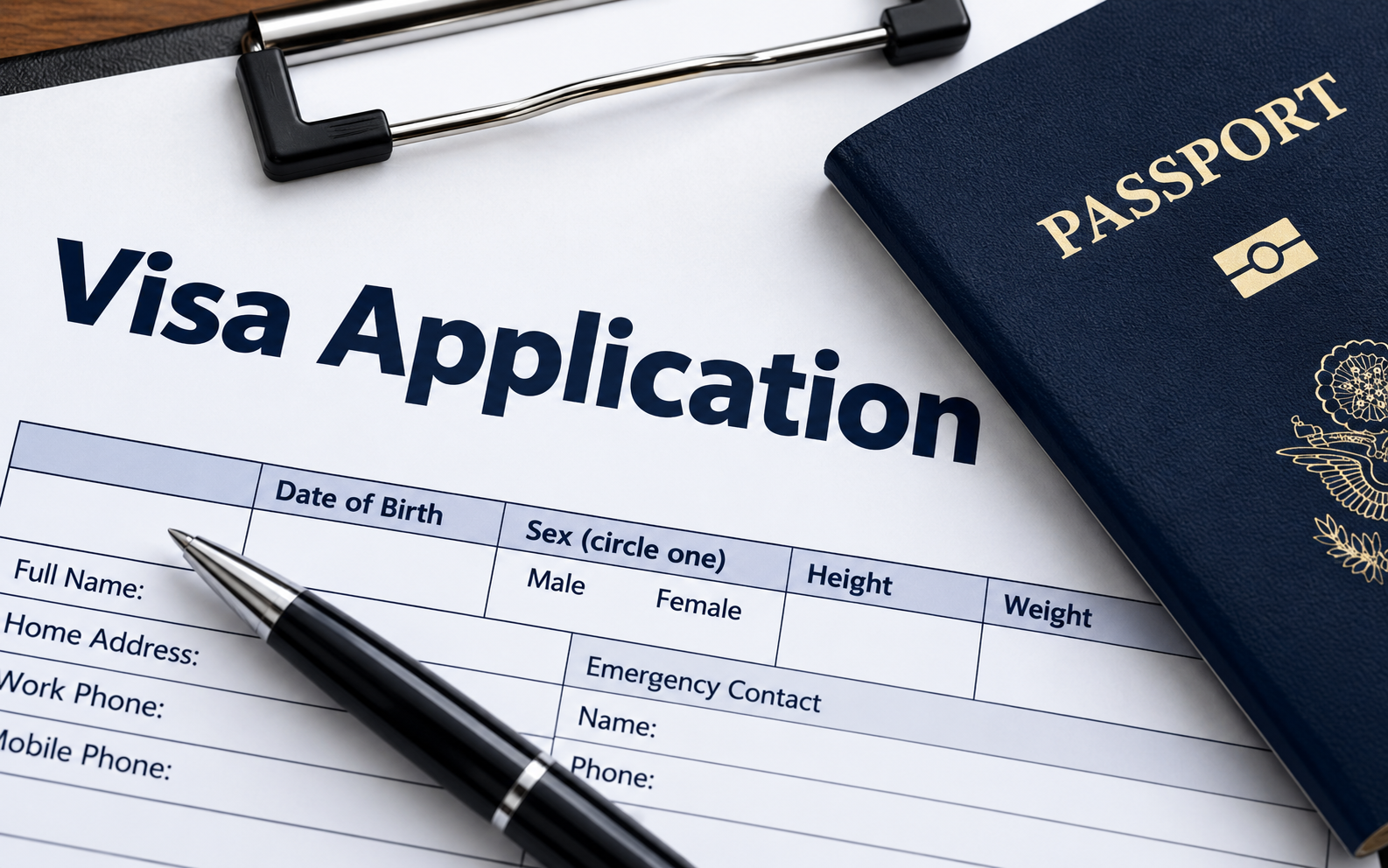
A strong case starts well before you ever speak to an officer. The foundation is the DS-160 application, which collects your personal, employment, and travel information.
The fee to fill out this form is currently $185 USD. This is non-refundable, non-transferable and covers processing costs regardless if you get approved or denied.
Accuracy is critical. Any inconsistency between your DS-160, supporting documents, and interview answers can lead to denial. The process cannot move forward without completing this application and appearing for an interview when required.
Key ways to strengthen your application include:
- Demonstrating stable employment or business ownership
- Showing consistent income and financial records
- Providing a clear, realistic purpose of travel such as an itinerary with clear dates of where you will be and for how long.
- Avoiding vague or overly complicated travel plans
- Budget for your trip and proof of funds showing how you will pay for the trip
Invitation letters from people who will host you in the U.S.
If you are planning on staying with a friend or family member, it is often recommended that you include a letter written by them. The letter should be specific on what the host is covering and what you are responsible for. For example, your host should specify if they will offer you a free place to stay during your stay, transportation and food or any combination of those costs.
Where the Visa Interview Takes Place
Visitor visa interviews are conducted at a U.S. embassy or consulate, typically in your country of residence or nationality.
This is a formal government setting where a consular officer will review your case and ask targeted questions. The interview is usually brief often lasting just a few minutes, but it is highly decisive. Your ability to answer clearly and confidently matters just as much as your documentation.
How Long the Process Takes in 2026
The visa timeline varies significantly depending on location, demand, and security checks. There is no single universal timeframe, but there are clear benchmarks:
- DS-160 submission: Must be completed before scheduling; typically requires at least a 48-hour gap before booking an interview
- Interview wait time: Can range from a few days to several months or even over a year in high-demand countries
- Post-interview processing: Often a few days, but additional administrative processing can take weeks or longer
The U.S. Department of State confirms that wait times vary widely by embassy and are based on workload, staffing and even the political climate. In 2026, some locations may have short wait times (under 30 days), while others exceed 6–12 months, especially in high-demand regions.
It is often recommended that you start planning up to a year in advance, as getting an interview scheduled can take anywhere from 3-9 months.
What Happens During the Interview
The interview is where your entire application is tested. Officers are trained to assess credibility quickly, focusing on:
- Whether your trip makes sense
- Whether your documents support your claims
- Whether you appear likely to return home
Common questions include:
- Why are you visiting the U.S.
- What do you do for work
- Who is paying for your trip
- Do you have family in the U.S.
Your answers should be direct, consistent, and supported by your application.
Red Flags That Can Lead to Denial
Understanding what weakens an application is just as important as knowing what strengthens it. Common issues include:
- Inconsistent answers between the DS-160 and interview
- Lack of strong ties to your country of residency or nationality
- Suspicious financial activity or unexplained funds
- Vague or unrealistic travel plans
- Dating a U.S. citizen that plan on visiting
- Whether anyone in your family applied for an immigrant visa on your behalf
Even small inconsistencies can raise concerns, as officers are trained to detect risk indicators quickly.
A Denial Can Be Followed By An Approval
Just because you were denied a visitor’s visa should not deter you from applying for a visa again. We helped countless families put strong cases in front of consular officers and turn their denials into approvals. You have to assess what went wrong in the process and be ready to address in the next application.
Final Strategy: Treat It Like a Legal Case
A visitor visa application is similar to a legal argument. You are presenting evidence that you meet the requirements, and the officer is making a judgment based on that evidence.
The strongest applications are clear and consistent, equipped with legitimate documents and focused on proving intent to return to their home country.
While the process in 2026 may be faster in some regions, approval still comes down to one thing: whether the officer is convinced by your case.
If you or a family member need information regarding a specific case or the assistance of experienced attorneys fighting for people like you every day, call our 24-7 English/Spanish line at 248-951-2450 or reach out to us at Atiya Law.