
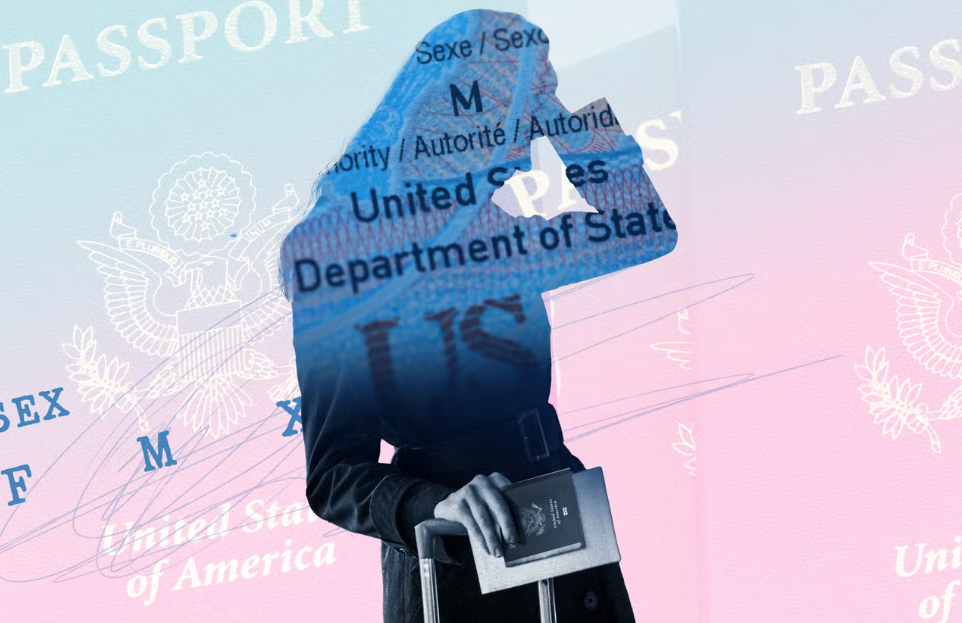
For individuals who are transitioning, updating legal identification is a critical part of aligning official records with their identity. While many people want to start with visible documents like a passport or driver’s license, the process does not work that way. Government agencies rely on underlying records, and if those are not updated first, applications will often be delayed and ultimately denied. Understanding the correct order is essential in avoiding unnecessary complications.
Step 1: Obtaining a Legal Name Change
The process typically begins with a court-ordered name change. This involves filing a petition with the appropriate local court and receiving a signed order from a judge approving the new name. That court order becomes the legal foundation for all future updates. Without it, most government agencies will not recognize or process a name change request.
Common pitfalls in this process is when applicants forget to follow all the required steps just as posting their intentions to for a name change and serving all necessary parties. An applicant will be required to appear before a judge and article the reasons for requesting a name change. They will be asked whether they are avoiding a criminal complaint anywhere in the United States or the world and whether they are avoiding any debtors.
Step 2: Updating the Birth Certificate
After the name change is granted by a court, the next step is amending the birth certificate. This is handled by the state where the individual was born, and requirements vary depending for each state. Some states require medical documentation, while others allow self-attestation or a court order. Because the birth certificate is considered a primary identity document, updating it early helps prevent inconsistencies later in the process.
PRO TIP: since you are changing your name on your birth certificate, this would be the time to change your gender using the same process so that you do not have to update your records twice.
Step 3: Updating Records with the Social Security Administration
Once the name change and birth certificate are updated, the next step is notifying the Social Security Administration. This is a crucial step that is often overlooked. Federal agencies rely heavily on Social Security records to verify identity. If the Social Security record does not match the updated name or gender marker, it can create delays or rejections when applying for other forms of identification.
Step 4: Updating the U.S. Passport
Only after completing the prior steps should an individual apply for a passport update through the U.S. Department of State. Passport applications are reviewed against existing federal records, including Social Security data and supporting identity documents. If there are inconsistencies, the application may be delayed until everything aligns. This is why the passport should be treated as one of the final steps in the process, not the first.
Why the Order Matters
The sequence of these steps is not arbitrary. Each agency depends on the accuracy of the records before it. Attempting to update a passport or other federal identification without first updating foundational documents can lead to processing delays, requests for additional evidence, or outright denial. Following the correct order ensures that each step builds on verified and consistent information.
Seeking Legal Advice
One of the primary reasons to consult an attorney is variation in state laws, especially when it comes to amending a birth certificate. Each state has its own evidentiary requirements, filing procedures, and standards for gender marker changes. Some states require medical documentation, others require specific court language, and some allow self-attestation. An attorney ensures that the petition and supporting documents meet the exact legal standard required in the issuing state, which helps avoid rejections or requests for additional evidence.
Another critical issue is ensuring consistency across all documents. Government agencies—including the Social Security Administration and the U.S. Department of State—cross-reference identity records. If there are discrepancies in spelling, dates, or gender markers between your court order, birth certificate, and Social Security record, it can trigger delays or denials. An attorney helps coordinate the process so that each step aligns properly, reducing the risk of mismatched records.
There is also the issue of properly drafted court orders. Not all name change orders are created equal. In some cases, especially for gender marker changes, the language in the order must be specific enough for other agencies to accept it. A poorly drafted order may technically grant a name change but fail to include the necessary findings or language required by other institutions. This can force individuals to go back to court to correct the order, adding time and expense.
For individuals with more complex situations, such as prior criminal history, immigration considerations, or prior name changes (sometimes due to a divorce), legal guidance becomes even more important. These factors can affect eligibility, required disclosures, and how agencies evaluate the request. An attorney can identify potential issues early and advise on how to address them before they become obstacles.
If you or a family member need information regarding a specific case or the assistance of experienced attorneys fighting for people like you every day, call our 24-7 English/Spanish line at 248-951-2450 or reach out to us at Atiya Law.