
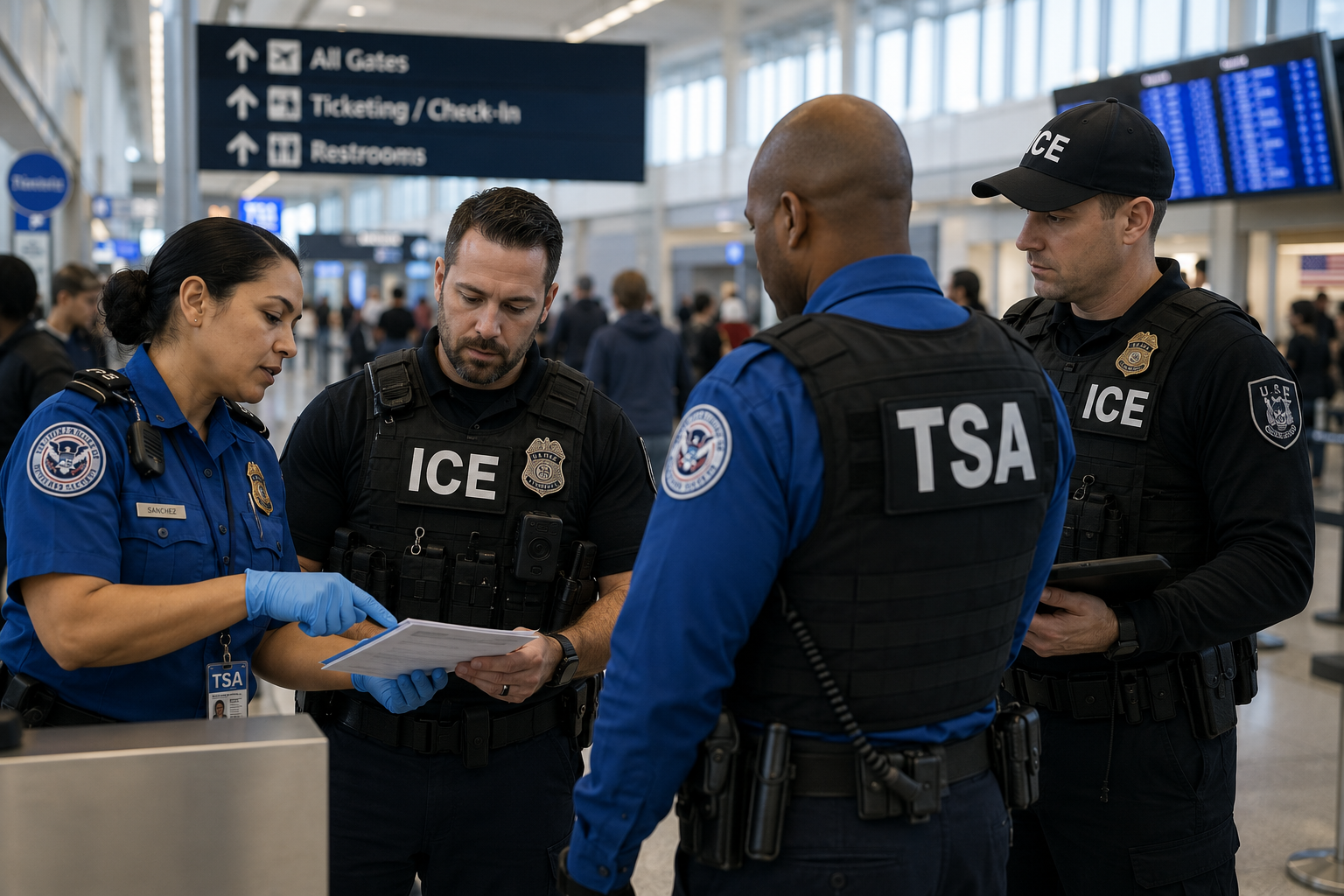
Non-American citizens should exercise heightened caution when traveling by air as federal agencies increasingly coordinate enforcement efforts to detain individuals who are wanted by the Immigration and Customs Enforcement (ICE).
Transportation Security Administration (TSA) has been sharing airline passenger information with ICE, allowing immigration authorities to cross-reference traveler data with its own databases and deploy agents directly to airports.
This coordination has raised serious concerns for non-citizens, including lawful permanent residents, visa holders, and individuals with pending or unresolved immigration matters. Even routine domestic travel can now carry unexpected risks.
The TSA – ICE Collaboration: Why You Should Stay Vigilant
According to numerous reports this week, the TSA has been forwarding passenger lists to ICE days prior to when passengers arrive at the airport, so that they are able to cross-reference it with their lists of wanted individuals. The result? ICE agents have been showing up to airports to arrest wanted individuals.
The TSA has been sending files to ICE that include photographs of the person targeted for deportation, and flight information that ICE employs to detain people before they board.
This is not a new procedure. Reports indicate that the collaboration had been implemented in March of 2025, but it is only now gaining traction as many people around the country attempt to travel for the holidays.
Increased Enforcement Is Not Isolated.
Just within the last month, the Trump administration announced a pause on the application process for migrants from 19 countries, additional USCIS screening rules, and issued a new travel ban.
These practices do not exist in a vacuum. They are part of a broader string of increasingly aggressive measures by the current Trump administration that disproportionately impact immigrant communities. Expanded data sharing, heightened surveillance, and the use of technology to identify and detain travelers reflect a policy trend focused on enforcement first, often at the expense of transparency and due process.
Why Immigrants Should Be Cautious About TSA Touchless ID (Biometrics)
Programs like TSA PreCheck Touchless ID rely on biometric data such as facial recognition and fingerprints. While marketed as a convenience, these systems raise significant red flags for immigrants. Concerns include:
-
- Privacy and Surveillance Risks: Biometric data is stored and shared across large federal databases, increasing long-term monitoring and potential misuse.
-
- Accuracy and Bias Issues: Facial recognition technology has been shown to be less accurate for people of color and other minorities, increasing the risk of false matches or wrongful scrutiny.
-
- Data Security Concerns: Large biometric databases are prime targets for breaches, exposing highly sensitive personal information.
-
- Eligibility Confusion: Requirements are inconsistently applied. Some programs appear to require a U.S. passport, while others allow limited use by lawful permanent residents, creating uncertainty and risk.
-
- Involuntary or Unclear Enrollment: Some travelers report being enrolled or flagged without knowingly opting in, underscoring the lack of transparency.
For immigrants—who may already be subject to heightened scrutiny—errors or data sharing involving biometric systems can have legal consequences.
Know Your Rights When Traveling
-
- You have the right to remain silent. You are required to answer questions about your immigration status, place of birth, or how you entered the United States if you are seeking admission to the United States because officers need to verify your identity and travel history. But remember, you are speaking to a law enforcement officer. You can ask for an attorney when you are subjected to further questioning.
-
- You have the right to speak with an attorney. You can clearly state: “I wish to speak with an attorney before answering any questions.”
-
- You have the right to ask if you are being detained. If you are not being detained, you may ask if you are free to leave.
-
- You do not have to consent to searches of your phone or electronic devices without a warrant, even at an airport. Officers can choose to deny you entry into the United States if you refuse to consent to a search of your phone or electronic devices.
-
- You do not have to sign anything you do not understand. Documents signed under pressure can have serious immigration consequences. This is often seen when people think they are voluntarily choosing to leave the U.S. but later find out the implications of what they signed is having an Order of Removal issued against them.
-
- Lawful presence does not eliminate risk. Even lawful permanent residents and visa holders can face questioning or detention, making legal guidance critical before travel.
Speak With an Experienced Attorney Before You Travel
Given the current enforcement environment, immigrants should not make any assumptions about safety when traveling, even domestically. Speaking with an experienced attorney before traveling or enrolling in biometric identification programs is critical. An attorney can assess your specific immigration status and risk profile, advise whether travel is safe under current conditions, explain the legal implications of biometric data collection, and help you make informed decisions that protect your rights.
The Bottom Line
What is being presented as “efficiency” or “security” often functions in practice as expanded surveillance and enforcement. For immigrants, the stakes are higher. Awareness, caution, and legal guidance are essential tools in navigating a system that is increasingly coordinated, data-driven, and aggressive in its targeting of immigrant populations.
If you or a family member need information regarding a specific case or the assistance of experienced attorneys fighting for people like you every day, call our 24-7 English/Spanish line at 248-951-2450 or reach out to us at Atiya Law.