For many couples, obtaining lawful permanent residence through marriage is one of the most common family-based pathways to a green card in the United States. While the process may seem straightforward, United States Citizenship and Immigration Services (USCIS) carefully reviews every marriage-based application to ensure the relationship is genuine and not entered solely for immigration benefits.
Understanding what USCIS looks for, how the removal of conditions process works, and the serious consequences of marriage fraud can help couples navigate the process successfully.
Who Can Apply for a Marriage-Based Green Card?
A U.S. citizen has the legal right to sponsor their spouse for a green card. In many cases, if the foreign national spouse entered the United States legally, was inspected, and was admitted into the country, they may be eligible to file for adjustment of status (AOS) and obtain their green card without leaving the United States. AOS is the name of applying for a green card while in the U.S. while applying for a green card outside the U.S. is called Consular Processing.
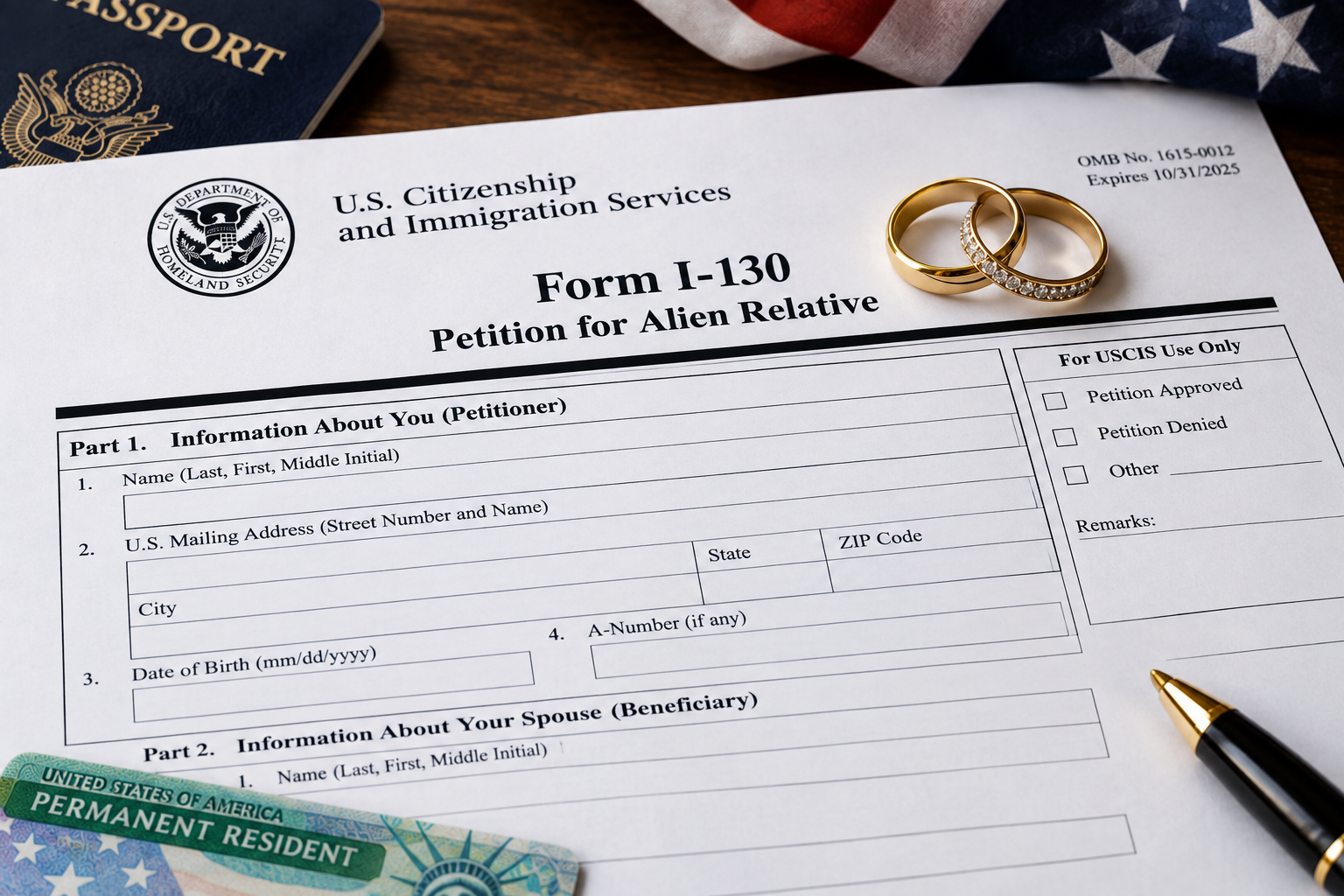
Some couples choose to first file Form I-130, Petition for Alien Relative, and wait for approval before proceeding with the green card application. Others may file the I-130 and adjustment of status application simultaneously when eligible. Wherever possible, when families qualify to concurrent filing of their applications, we discuss this as an important consideration in the process and you should flag it for your attorney.
The Importance of the 90-Day Rule
One issue that often arises in marriage-based cases involves what is commonly referred to as the “90-day rule.”
If a person enters the United States as a tourist, student, or under another nonimmigrant visa category, they are generally entering the country with nonimmigrant intent. USCIS may closely scrutinize situations where a person enters the United States and then quickly marries and applies for a green card shortly thereafter.
Filing for a green card within 90 days of a recent entry can create concerns that the individual may have intended to immigrate at the time they entered the country. In such cases, applicants may need to overcome the presumption that they misrepresented their intentions when seeking admission at a port of entry with a border officer.
Evidence of a legitimate relationship may be used to overcome these concerns. Couples can demonstrate that their relationship is genuine, ongoing, and developed naturally. The burden is on your to show that how the decision to marry came about as officers will examine whether it was a preplanned effort to obtain immigration benefits. The legitimacy of the marriage is in question.
What USCIS Looks for in a Marriage-Based Green Card Case
USCIS is primarily concerned with determining whether the marriage is bona fide, meaning it was entered into in good faith and not for immigration purposes.
Officers typically review evidence demonstrating that the couple has built a life together. Examples include:
- Joint bank accounts
- Joint leases or mortgages
- Utility bills showing a shared residence
- Insurance policies listing each other as beneficiaries
- Tax returns filed jointly
- Birth certificates of children born to the marriage
- Photographs documenting the relationship
- Travel records
- Affidavits from friends and family
During the interview process, USCIS may ask detailed questions about the couple’s relationship, daily routines, family members, and future plans. Consistency and credibility are critical.
Ultimately, USCIS wants to see that the relationship is real, honest, ongoing, and supported by a genuine timeline rather than created solely to obtain immigration benefits.
Conditional Green Cards and Removal of Conditions
When a marriage is less than two years old at the time permanent residence is granted, USCIS generally issues a conditional green card that is valid for two years.
Before the conditional green card expires, the couple must file Form I-751, Petition to Remove Conditions on Residence. This filing must be within the 90-day period immediately preceding the expiration of the conditional green card.
The purpose of the removal of conditions process is to give USCIS another opportunity to verify that the marriage remains genuine. Couples should submit updated evidence demonstrating that they continue to live together and share a married life (mortgage or lease documents, insurance policies, children’s birth certificates, etc).
If USCIS approves the I-751 petition, the conditions are removed and the immigrant spouse receives a ten-year permanent resident card.
What Happens if the Marriage Ends?
Not every marriage works out. USCIS recognizes this reality and allows certain applicants to request a waiver of the joint filing requirement to remove the condition of marriage from the green card.
Depending on the circumstances, a conditional resident may be able to remove conditions independently if:
- The marriage was entered into in good faith but later ended in divorce
- The U.S. citizen spouse has died
- The immigrant spouse suffered abuse or extreme cruelty
These cases often require substantial documentation and legal analysis to establish eligibility. In cases of divorce, separation is not sufficient for USCIS to accept your filing. You will need to establish that divorce proceedings have commenced and later supplement the record with your final divorce decree.
Consequences of Marriage Fraud
Marriage fraud is one of the most serious violations in immigration law. USCIS actively investigates cases where there is evidence that a marriage was entered into solely for the purpose of obtaining immigration benefits.
Consequences may include:
- Denial of the green card application
- Placement into removal proceedings
- Permanent immigration consequences that may prevent future immigration benefits
- Criminal prosecution
- Significant fines
- Potential imprisonment
USCIS officers are trained to identify inconsistencies, fabricated evidence, and relationships that do not appear genuine. Because of these risks, couples should ensure that all information submitted to USCIS is truthful and supported by accurate documentation.
An Attorney Can Help Make Your Case
One of the most important reasons to hire an attorney is to ensure that all forms and supporting documentation are completed correctly. Marriage-based green card applications often require multiple forms, including petitions, adjustment of status applications, affidavits of support, medical examinations, and extensive evidence demonstrating the legitimacy of the marriage. Even minor errors, missing documents, or inconsistent information can lead to Requests for Evidence (RFEs), delays, or denials.
An attorney can also help couples properly document their bona fide marriage by presenting the most persuasive evidence to make your case as strong as possible.
If you or a family member need information regarding a specific case or the assistance of experienced attorneys fighting for people like you every day, call our 24-7 English/Spanish line at 248-951-2450 or reach out to us at Atiya Law.